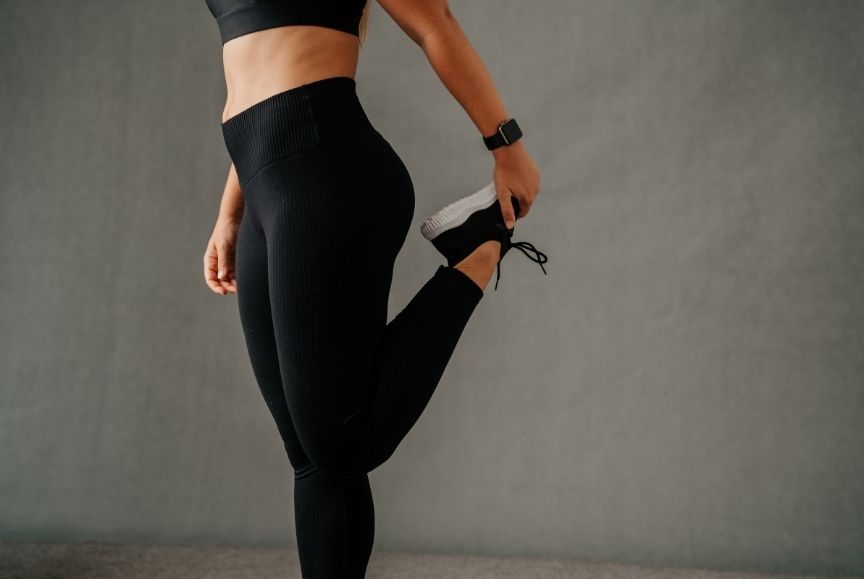
In this article, personal trainer Baltazar explains what to do after leg day to support recovery, including when to stretch, how nutrition and sleep affect muscle repair, why light activity can help with soreness, and why taking enough time to recover can actually improve your lower body results.
A hard leg day can leave your quads, hamstrings, and glutes feeling sore and fatigued. While that soreness may feel like proof that you worked hard, what you do after your workout matters just as much as what you do in the gym.
Here is what to prioritize after leg day.
Keep Your Body Moving
After a demanding lower body workout, resist the urge to immediately become completely sedentary.
Light movement can be a good way to transition out of a hard training session and stay mobile when your legs feel stiff. That might mean taking an easy walk, running errands, or simply continuing to move throughout the day.
The same approach can be helpful the following day. If your legs are sore, you do not necessarily need complete bed rest. Low-intensity movement can be part of an active recovery day without placing the same demands on your muscles as another leg workout.
The key word is light.
A recovery day should not turn into another challenging training session. If your legs are still significantly fatigued from the previous workout, give them a chance to recover instead of immediately loading them again.
Stretch If It Feels Good, But Do Not Rely on It to Prevent Soreness
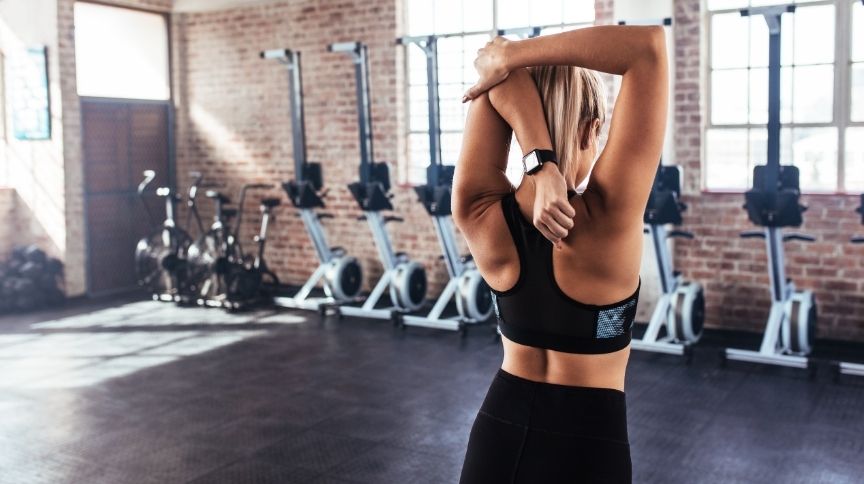
After a lower body workout, static stretching can be a useful way to loosen up and work on flexibility.
Static stretching is different from the more dynamic mobility work commonly used before exercise. Rather than continuously moving through a range of motion, static stretches are held for longer periods, such as 15 to 30 seconds.
If your hips, quads, hamstrings, or calves feel tight after training, a few controlled stretches may feel good. Just do not expect stretching to eliminate next-day soreness. Research has not shown post-workout stretching to substantially reduce delayed-onset muscle soreness compared with simply resting.
Foam rolling and massage are also optional recovery tools. Some people find them helpful for reducing feelings of soreness or stiffness, but they should complement the fundamentals of recovery rather than replace them.
Refuel After Your Workout
Your body needs energy and nutrients to recover from a hard training session, particularly if your goal is to build muscle in your glutes and legs. Protein is especially important because it supplies the amino acids your body uses to repair and build muscle tissue.
You also do not need to sprint for a protein shake the second your workout ends. Rather than obsessing over a tiny post-workout window, focus on consistently eating enough protein across the entire day.
Carbohydrates matter, too.
Lower body training can be demanding, and carbohydrates help replenish muscle glycogen, which is one of the body’s primary fuel sources during exercise. Pairing protein with a source of carbohydrates after training can be a simple way to support both muscle repair and energy replenishment.
A post-workout meal could be as straightforward as chicken with rice, Greek yogurt with fruit and granola, eggs with toast and fruit, or a smoothie with protein and carbohydrates.
The exact meal matters less than consistently giving your body enough nutrition to recover.
Eat Enough to Support Your Goals

If you are trying to build stronger or more developed glutes and legs, what you eat throughout the day matters just as much as your post-workout meal.
A common mistake is training hard while chronically under-eating.
People who are new to resistance training may be able to build muscle while losing body fat, particularly when their body is adapting to strength training for the first time. But building significant muscle requires resources.
If you are consistently training your lower body several times a week, your body needs enough total calories, protein, carbohydrates, fats, vitamins, minerals, and fluids to support both training and recovery.
More training cannot compensate for inadequate nutrition.
Rehydrate After Leg Day
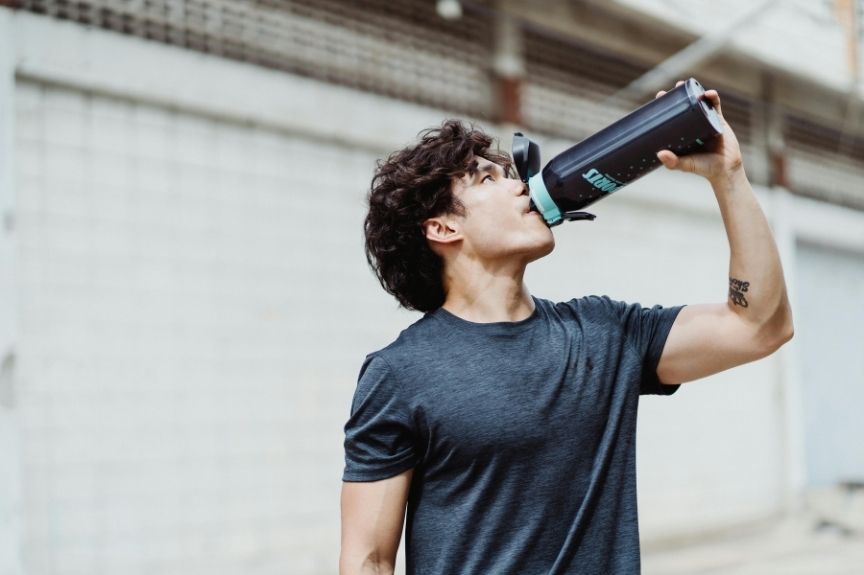
Do not overlook hydration. You lose fluid through sweat during exercise, and those losses can be greater during longer workouts, high-intensity sessions, or training in hot conditions.
Drink fluids after your workout and continue hydrating throughout the day rather than trying to make up for everything at once. If you sweat heavily or exercise for long periods, replacing electrolytes may also be useful.
There is no single amount of water that works for everyone. Your needs depend on factors such as body size, sweat rate, workout duration, temperature, and how much fluid you consumed before and during exercise.
A simple goal is to begin your workout well hydrated and replace what you lose afterward.
Expect Some Soreness, Especially After a New or Harder Workout
If your legs are sore a day or two after training, you may be experiencing delayed-onset muscle soreness, commonly called DOMS.
DOMS often develops after a workout that is new or more challenging than what your body is accustomed to. It can include tenderness, stiffness, and a temporary reduction in range of motion.
That soreness does not necessarily mean something went wrong. It also does not mean the workout was more effective. You can have an excellent lower body workout without being extremely sore afterward.
As your body adapts to a training program, you may actually become less sore even while continuing to gain strength and muscle.
Give Sore Muscles Time Before Training Them Hard Again
There is an important difference between staying active and training a muscle that has not recovered.
If your legs are still noticeably fatigued, your strength, range of motion, and technique may not be at their best. Trying to force another heavy lower body session can turn productive training into extra volume that your body now has to recover from.
For many people, three thoughtfully programmed lower body sessions per week can provide plenty of opportunity to build strength and muscle without training the same muscles hard every day.
How often you should train depends on your program, experience, intensity, volume, and individual recovery, but the basic principle stays the same:
Train, recover, then train again. More workouts are not automatically better workouts.
Prioritize Sleep

Some of the most important recovery work happens while you are asleep.
Sleep supports many of the processes involved in physical recovery and athletic performance. Consistently cutting sleep short can also make hard training feel harder and may negatively affect performance, particularly during demanding compound exercises.
Aim for enough sleep that you regularly wake up feeling rested. For many adults, that means roughly seven to nine hours per night.
Quality matters as well as quantity. Eight hours spent repeatedly waking up throughout the night is not the same as eight hours of restful sleep.
If improving your lower body is a priority, sleep should be treated as part of your training plan rather than an afterthought.
Pay Attention to Your Overall Stress
Your muscles are not recovering in isolation from the rest of your life. Work deadlines, poor sleep, travel, family responsibilities, emotional stress, and other demands can all affect how recovered you feel.
You cannot eliminate every source of stress, and you do not need to. But your training should account for what your body can realistically handle at any given time.
If you are exhausted, sleeping poorly, and unusually sore, that may not be the best day to force your hardest lower body workout simply because it is written on the schedule.
Consistency matters, but so does knowing when your body needs recovery.
Know the Difference Between Soreness and a Potential Injury
Normal post-workout soreness tends to feel like general tenderness, stiffness, or aching in the muscles you trained.
Sharp or severe pain is different.
Pain that feels sudden, localized, or progressively worse should not simply be pushed through. Severe swelling, significant weakness, pain that does not improve, or unusually dark urine after strenuous exercise can also be signs that something more serious is happening and should be evaluated by a medical professional.
Listening to your body does not mean skipping every workout because your legs feel a little sore. It means learning the difference between normal training fatigue and symptoms that should not be ignored.
Keep Your Leg Day Recovery Routine Simple
Good recovery does not require an expensive collection of tools, supplements, or complicated rituals.
Start with the things that matter most:
Move your body without turning your recovery day into another workout. Eat enough food, with adequate protein and carbohydrates to support your training. Replace fluids lost through exercise. Get quality sleep. Give heavily trained muscles enough time before challenging them again.
Stretch, foam roll, or get a massage if those things help you feel better, but think of them as extras.
The foundation is much simpler. Train with purpose. Recover with the same intention. Return prepared to deliver strong results.
That is what allows you to keep getting stronger, instead of simply getting more tired.
Turn Recovery Into Results
Recovery works best when it supports a training plan designed to help you progress over time. The Relentless Spirit Lower Body Program provides a structured approach to training your glutes, quads, and hamstrings while balancing volume, progression, and recovery.
If you want a clear plan to follow in the gym, the program can help you train with more purpose, stay consistent, and keep progressing toward your lower body goals. Get started with the Relentless Spirit Lower Body Program and start building a stronger, more developed lower body.
About the author : Baltazar Villanueva

Baltazar Villanueva is a NASM certified personal trainer & nutritionist that provides services to the Denver metro region. Formerly a mixed martial arts fighter and self-defense trainer, he now provides clients with customized fitness programs that address whole-body wellness. Book a consultation with him here to get started on your fitness journey.